 Special Discount

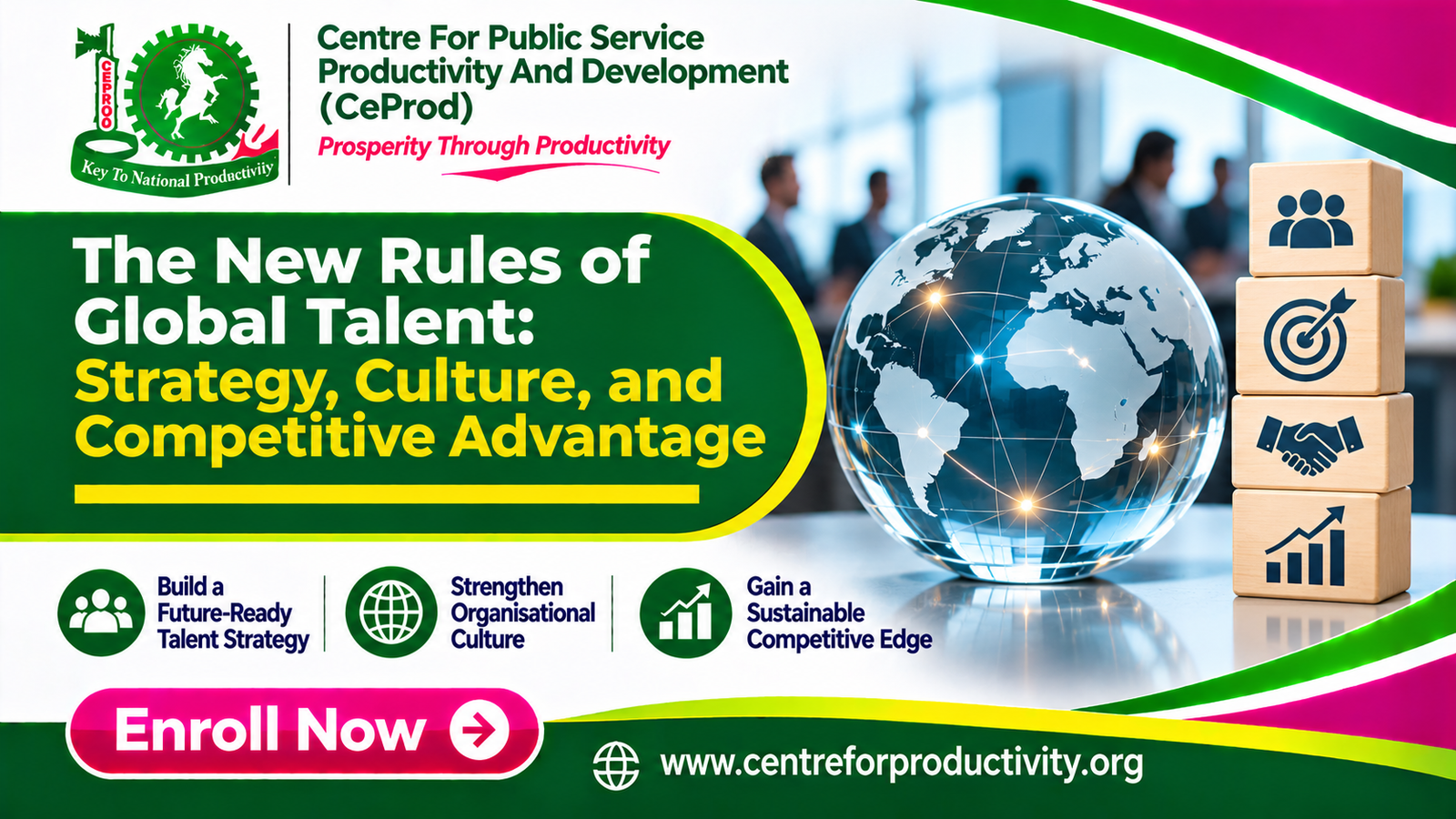
The New Rules of Global Talent: Strategy, Culture, and Competitive Advantage
- 01 - 04 Dec 2026
- 15 - 19 Feb 2027
- 10 - 14 May 2027
- 13 - 17 Sep 2027
- 08 - 12 Nov 2027
- Lagos, Nigeria
- Lagos, Nigeria
- Lagos, Nigeria
- Lagos, Nigeria
- Abuja, Nigeria
Distance Learning Mode
Special Discount
2 participants: 5% Group Discount
3 to 5 participants: 10% Group Discount
6 or more participants: 15% Group Discount
Distance Learning Mode: 10% Discount
Group discount applies for payment one week prior to the training date
Details
Course Overview
Talent has become a decisive source of organisational
resilience, innovation and competitive advantage. Yet organisations face
changing workforce expectations, skills shortages, demographic shifts, digital
disruption and intense competition for specialist capabilities. This programme
examines how leaders and HR professionals can rethink talent strategy for a
global, connected and culturally diverse labour market. Participants explore
workforce planning, employer value proposition, talent acquisition, skills
development, succession, retention and inclusive culture. The course connects
talent decisions to organisational strategy and shows how to build a coherent
approach that attracts the right people, develops critical capabilities and
sustains performance across locations and cultures.
Learning Outcomes
By the end of this programme, participants will be able to:
·
Explain the changing global talent landscape and
its implications for organisational competitiveness.
·
Translate organisational priorities into
workforce and capability requirements.
·
Strengthen talent attraction, employer
positioning, selection and onboarding strategies.
·
Design approaches for developing, engaging and
retaining a diverse workforce.
·
Use practical measures to evaluate talent
outcomes and inform continuous improvement.
Course Outline
The programme is structured around four integrated modules,
. Delivery should blend facilitator input, practical tools, case discussions,
group work, simulations and action planning.
Module 1: The Global Talent Landscape: New Realities and Strategic
Implications
Examine the forces reshaping the competition for talent and
the implications for organisations operating locally and internationally.
·
Global and local labour-market trends: skills
shortages, mobility and changing expectations
·
Digital transformation, AI, automation and the
changing nature of work
·
Employee expectations: flexibility, purpose,
wellbeing, growth and fair treatment
·
Talent risks: critical-role dependency,
turnover, skills obsolescence and succession gaps
·
From personnel administration to strategic
talent management
Practical application: Talent
landscape scan: identify three workforce trends and assess how each could
affect a selected organisation\'s ability to deliver its strategy.
Module 2: Workforce Planning, Talent Attraction and Employer Advantage
Connect business strategy to workforce requirements and
develop a compelling approach to attracting the people and skills the
organisation needs.
·
Strategic workforce planning: demand, supply and
capability-gap analysis
·
Identifying critical roles, scarce skills and
future capability requirements
·
Employer value proposition and employer brand
·
Recruitment channels, inclusive sourcing and
evidence-based selection
·
Candidate experience, onboarding and
early-tenure retention
·
Ethical recruitment and fair, transparent talent
practices
Practical application: Workforce
planning exercise: map critical roles, identify capability gaps and propose a
targeted attraction plan.
Module 3: Developing, Engaging and Retaining High-Value Talent
Explore how organisations can build a continuous talent
pipeline and create conditions in which people can contribute and grow.
·
Talent segmentation and differentiated
development strategies
·
Learning pathways, reskilling, upskilling,
coaching and mentoring
·
Career mobility, internal talent marketplaces
and development conversations
·
Performance, recognition, engagement and
retention drivers
·
Inclusive culture and managing a
multigenerational, multicultural workforce
·
Succession planning and leadership-pipeline
development
Practical application: Talent
retention case: diagnose why a high-performing employee group is leaving and
design a practical retention and development response.
Module 4: Global Talent Governance, Measurement and Action Planning
Integrate talent practices into a coherent operating model
and use data to evaluate progress and make better decisions.
·
Talent management operating model, roles and
accountability
·
Talent analytics: turnover, time-to-fill,
internal mobility, capability and succession indicators
·
Using workforce data responsibly: privacy,
fairness and bias awareness
·
Managing talent across borders, locations and
different employment contexts
·
Linking talent outcomes to productivity, service
quality, innovation and organisational performance
·
Developing a 90-day talent-priority roadmap
Practical application: Talent
strategy lab: prepare a concise talent action plan with priority capabilities,
initiatives, owners, measures and review dates.
For Whom
This programme is designed for professionals in the
following roles and functions:
1. Chief
executives, managing directors and business owners
2. HR
directors, HR managers and heads of people and culture
3. Talent
acquisition and recruitment leaders
4. Learning
and development managers
5. Organisational
development and workforce planning professionals
6. Departmental
and business-unit heads
7. Regional
managers and leaders of multinational operations
8. Public-sector
directors and senior administrative officers
9. Succession
planning and leadership development professionals
10. Strategy,
transformation and business performance leaders
TESTIMONIALS
Here is what members who attended HR, Management and Leadership Courses said
The facilitators are good and full of experience. They have mastery of their presentation
I have acquired new leadership skills and techniques
Explore our Full Portfolio of Training Courses
Our portfolio of more than 200 training courses are currently designed to address the current training needs of our
clients incorporating latest trends and internationally accepted best practices, in each distinct subject area.